
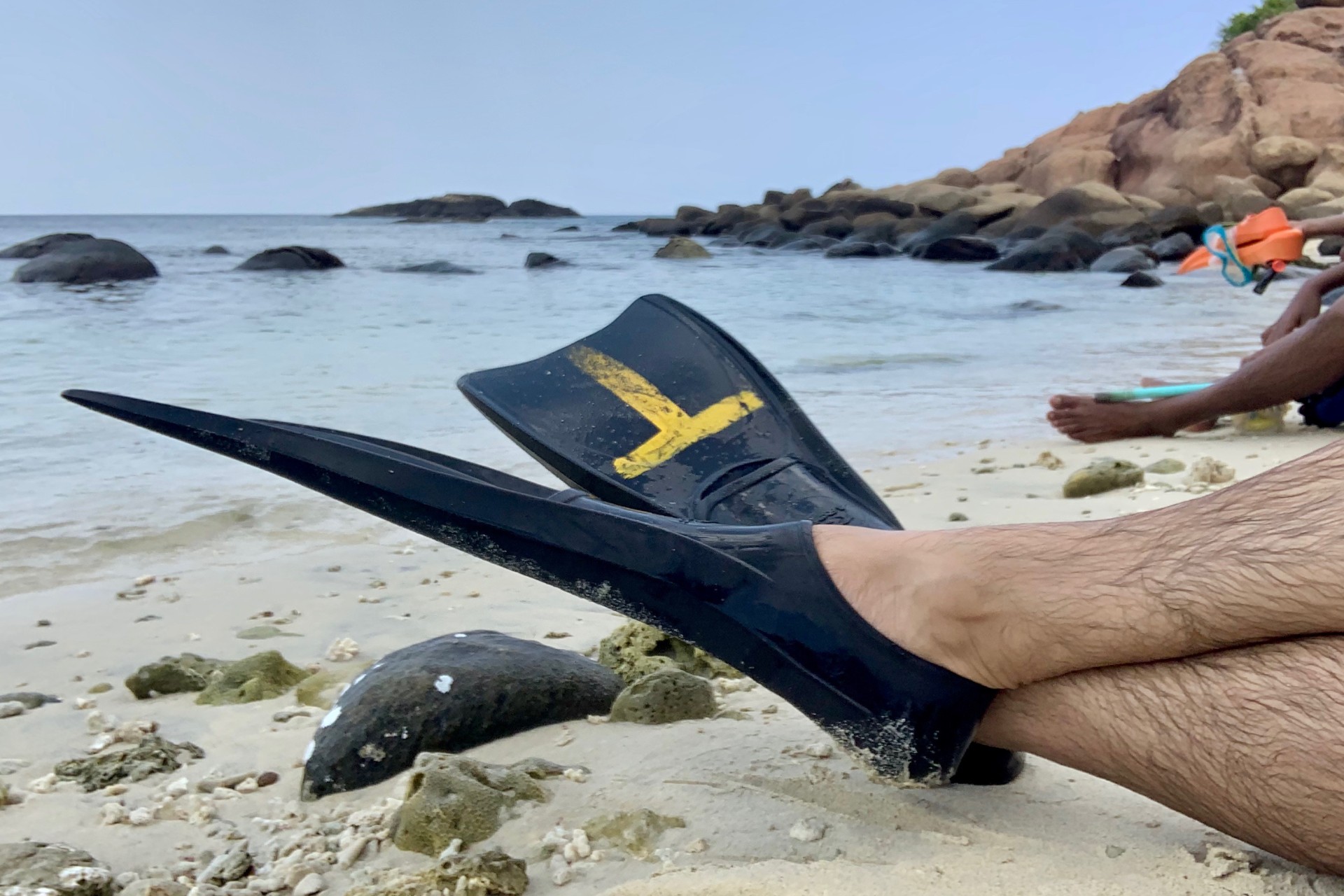
Fins are essential gear for anyone venturing underwater. But there’s a big difference between fins designed for scuba diving and those made for snorkelling. Here’s a breakdown of the key features to consider when choosing the right fins for your underwater adventures.
Power vs. Manoeuvrability – All About the Blade
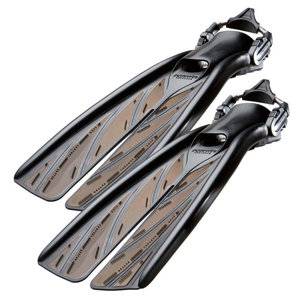
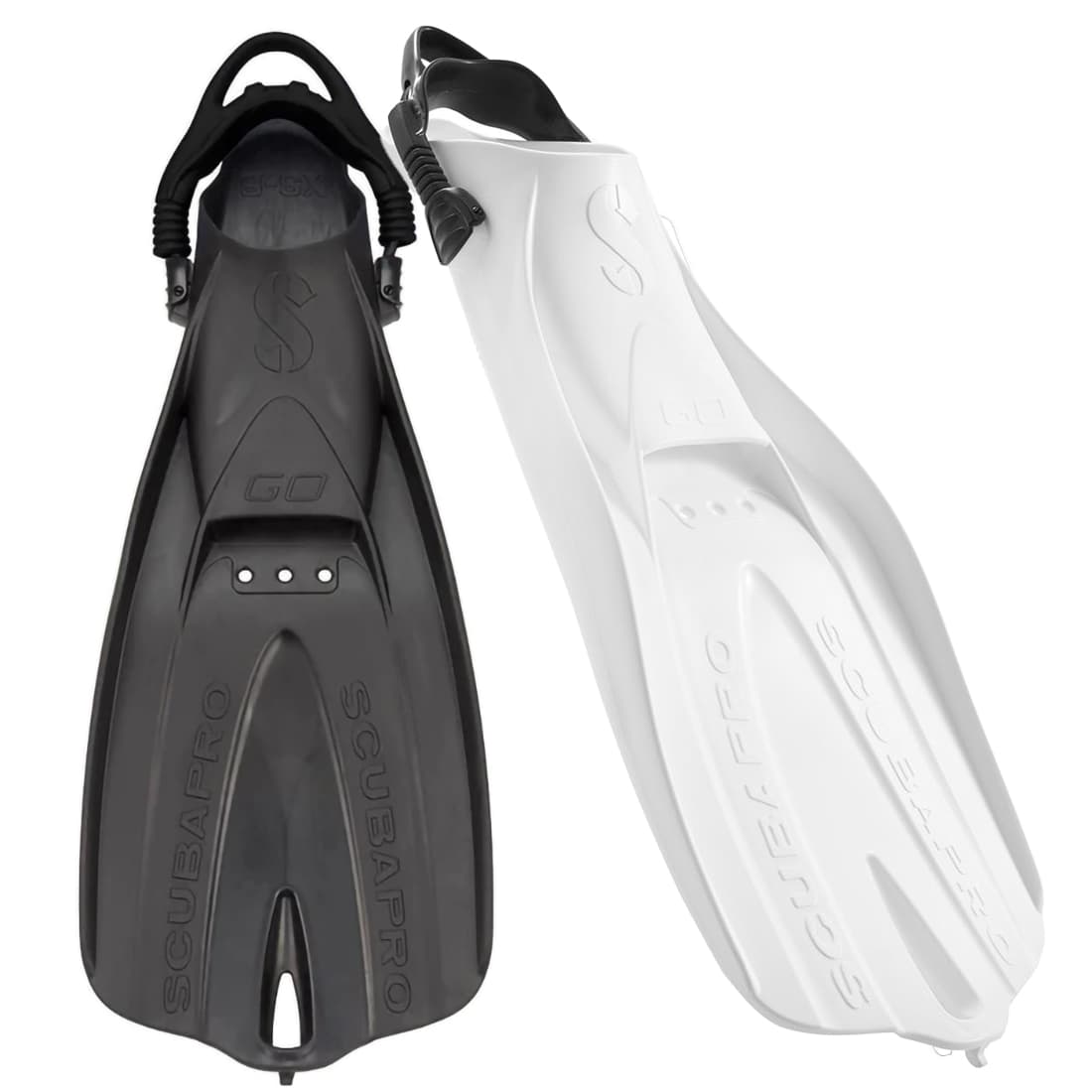
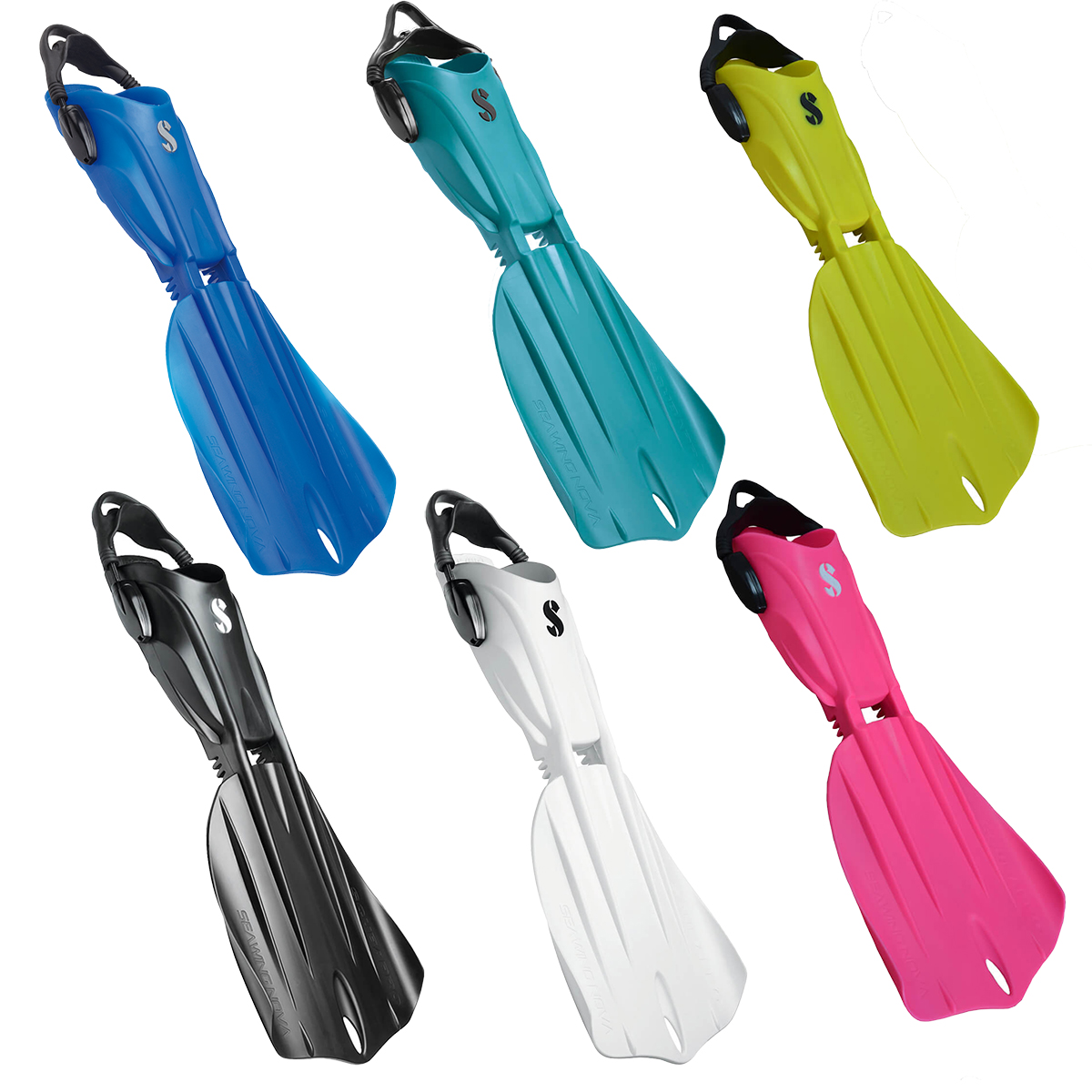
The biggest difference between diving fins and snorkelling fins lies in the blade. Diving fins are all about getting you places underwater. They typically have longer blades to push more water with each kick. Imagine using a large oar to propel a boat – that’s basically how it all works. These blades are often made from stiff materials like fiberglass or carbon fibre for maximum power transfer. The downside? They require more leg strength to use, which can be tiring for beginners.
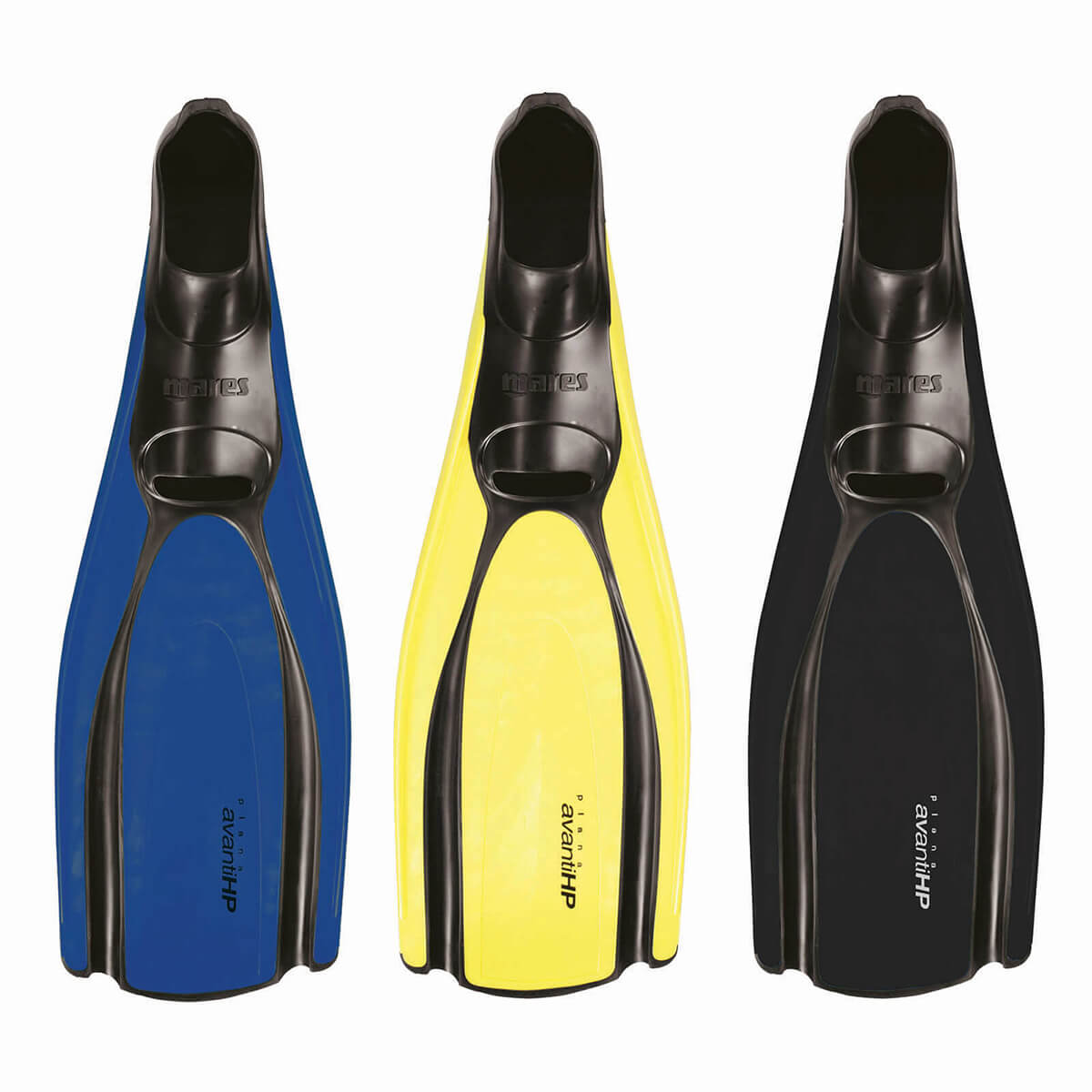
Snorkelling fins, on the other hand, are all about easy movement whilst on or near the surface. Their blades are shorter and made from softer materials like rubber or plastic. This design allows for quicker kicks, perfect for exploring reefs or staying afloat while observing marine life. The softer blade also means less leg strain, making snorkelling more relaxing.
Gearing Up for Different Depths – Open Heel vs. Closed Heel
The heel design caters to the specific needs of each activity. Diving fins typically have an open heel to accommodate diving boots. These boots keep your feet warm in cold water and provide a secure fit for powerful kicks. However, putting on and taking off diving fins with boots can be a hassle.
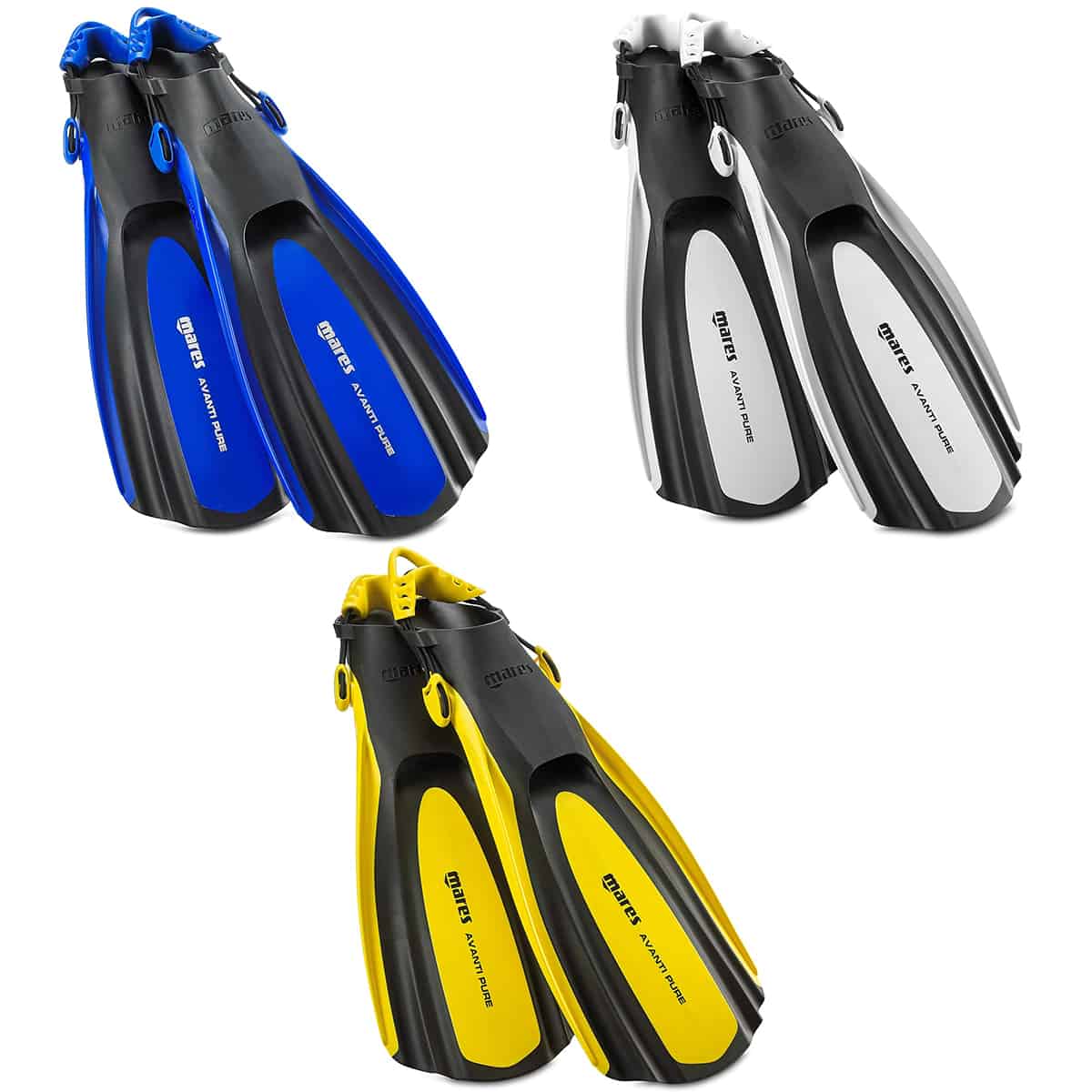
Snorkelling fins usually have a closed-heel design, like a full-foot shoe. This makes them easy to slip on and off – ideal for switching between activities on the water’s surface. Some snorkelling fins also have adjustable straps for a personalised fit.
Beyond the Basics – Additional Features
Diving fins may have features like channels or vents in the blade to improve water flow and reduce drag. Snorkelling fins might prioritise comfortable foot pockets or bright colours for better visibility.
Cost Considerations:
Diving fins tend to be more expensive due to their complex design and materials. This investment ensures efficient movement at depth, durability and makes them a crucial piece of safety equipment for deeper dives, ensuring efficient movement and a safe underwater experience.
Choosing the Right Fin for Your Dive
The best choice depends on what you’re doing underwater. Diving fins are a must for exploring deeper waters or navigating currents. Their powerful kicks are essential for manoeuvring underwater and returning safely to the surface.
Snorkelling fins on the other hand, with their focus on comfort and ease of use, are ideal for exploring shallow reefs or swimming near the surface. They’re also great for beginners because they require less kicking effort.
Specialised Options
There are also specialised fins for specific diving or snorkelling activities. Freediving fins, for example, are built with significant blade length and stiffness for maximum power during breath-hold dives. Technical diving fins offer increased power and stability for deep dives with heavy equipment. Similarly, specialised snorkelling fins are designed to suit certain specific activities like bodysurfing or spearfishing.
The Bottom Line:
The right fins can make a big difference underwater. By understanding the key differences between diving and snorkelling fins, you can ensure you have the right tool for the job, propelling yourself efficiently and exploring the underwater environment with confidence. So, whether you’re diving deep wrecks or gliding over colourful coral reefs, we can help you find the perfect fin for your chosen adventure.